Last updated:
The World Will Likely Pass 1.5°C of Global Warming within ~10 Years Unless Emissions Fall Much Faster
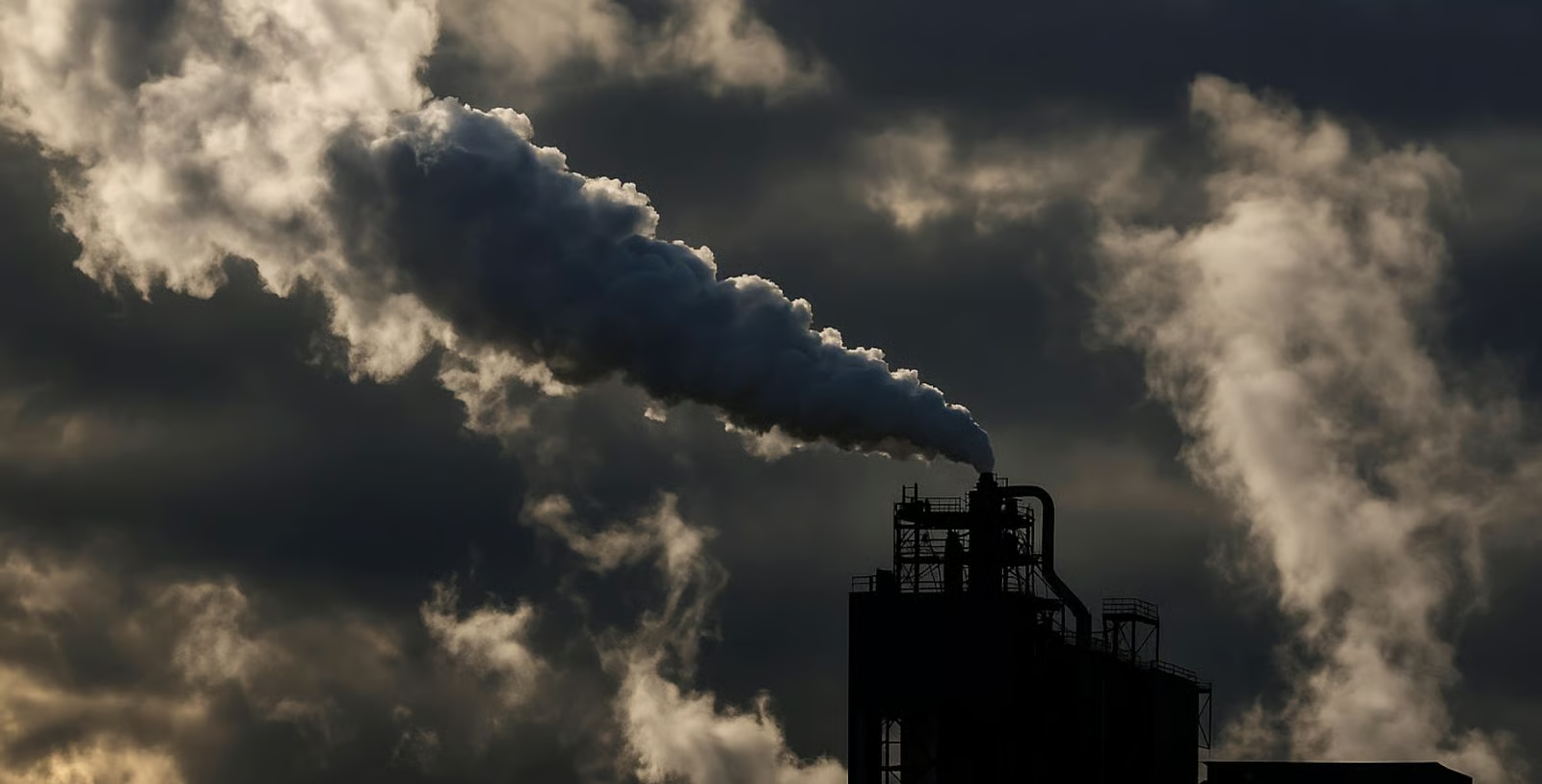
New climate research indicates that global temperatures are on track to exceed the critical 1.5°C threshold within the next decade unless immediate and drastic emission reductions are implemented.
A new United Nations assessment indicates that global greenhouse gas output increased by 2.3 percent this year, reaching 57.7 gigatonnes of CO2 equivalent. Based on the current trajectory, temperatures are projected to rise by approximately 2.8°C this century. Even if all national plans are fully implemented, warming is still expected to be around 2.3 to 2.5°C. This discrepancy between targets and projected outcomes influences policy decisions, investment timelines, and how lenders and insurers assess climate risk.
Reports suggest that a breach of the 1.5°C warming limit is "very likely" within the next decade unless emissions reductions are significantly accelerated. There has been a "modest improvement" of roughly 0.3°C in end-century projections compared to last year, but this change is deemed insufficient to align with the Paris Agreement's goals. A decade ago, the world was on track for roughly 4°C of warming, highlighting both the progress made and the substantial remaining shortfall.
At 2°C of warming, the proportion of people exposed to extreme heat more than doubles compared to a 1.5°C world. This increased exposure leads to higher health risks and productivity losses in major cities and key industrial areas. Coral reefs face severe decline, with at least a 70 percent loss projected at 1.5°C and around a 99 percent loss at 2°C. This decline threatens tourism and fisheries, which support millions of jobs and generate significant export revenue.
Markets are faced with reconciling two key numbers: the physical reality pointing to a near-term overshoot of 1.5°C, and current policies that still lead to about 2.8°C warming. Even with the full delivery of pledges, warming is only narrowed to roughly 2.3 to 2.5°C. The immediate implication is a direct call to action: accelerate real emissions reductions and simultaneously invest in infrastructure that is resilient to heat, including grids, industry, and coastal areas. The starting line for these efforts is already 57.7 gigatonnes of CO2 equivalent per year.